


When people think about weight loss, they usually think about running, gym workouts, or strict diets. But there is another simple option that can easily become part of your daily routine: yoga.
Yoga is not only about stretching or sitting quietly on a yoga mat. Depending on the style and intensity, yoga can involve strength, balance, movement and flexibility. It can also help you build a more active lifestyle and become more aware of your eating and daily habits.
So, can yoga help with weight loss?
Yes, yoga can be a useful part of a weight-management routine, but it is not a magic way to burn fat.
Research reviewed by the National Center for Complementary and Integrative Health (NCCIH) suggests that yoga may help with weight loss. A 2022 review of 22 studies involving 1,178 people found reductions in body weight, BMI, body fat and waist size among people taking part in yoga interventions. However, results can vary, and yoga works best as part of an overall healthy lifestyle.
The good thing is that you don't need to be very flexible or already fit to start.
You can begin with simple poses and gradually improve your strength, balance and flexibility.
In this guide, we will look at some of the best yoga poses for weight loss, how to do them, how long to practise, common mistakes, and how to create a simple yoga routine that you can actually follow.
Can Yoga Really Help With Weight Loss?
Let's clear up one common misunderstanding first.
Yoga does not automatically burn large amounts of fat just because you perform a few poses.
Weight loss happens when your overall energy intake and energy use create a calorie deficit over time. Physical activity increases the amount of energy your body uses, while your food choices affect how much energy you consume.
Yoga can still be useful because it combines movement with other habits that can support weight management.
It may help you:
- Become more physically active
- Build strength
- Improve flexibility
- Support better body awareness
- Manage stress
- Develop healthier lifestyle habits
NCCIH notes that yoga may also encourage healthier eating and physical-activity habits in some people.
So instead of thinking of yoga as a quick fat-burning trick, think of it as one useful part of your overall weight-loss routine.
Best Yoga Poses for Weight Loss
There are many yoga poses you can practise, but some are particularly useful for building strength and getting your body moving.
Here are 10 poses you can consider adding to your routine.
1. Surya Namaskar
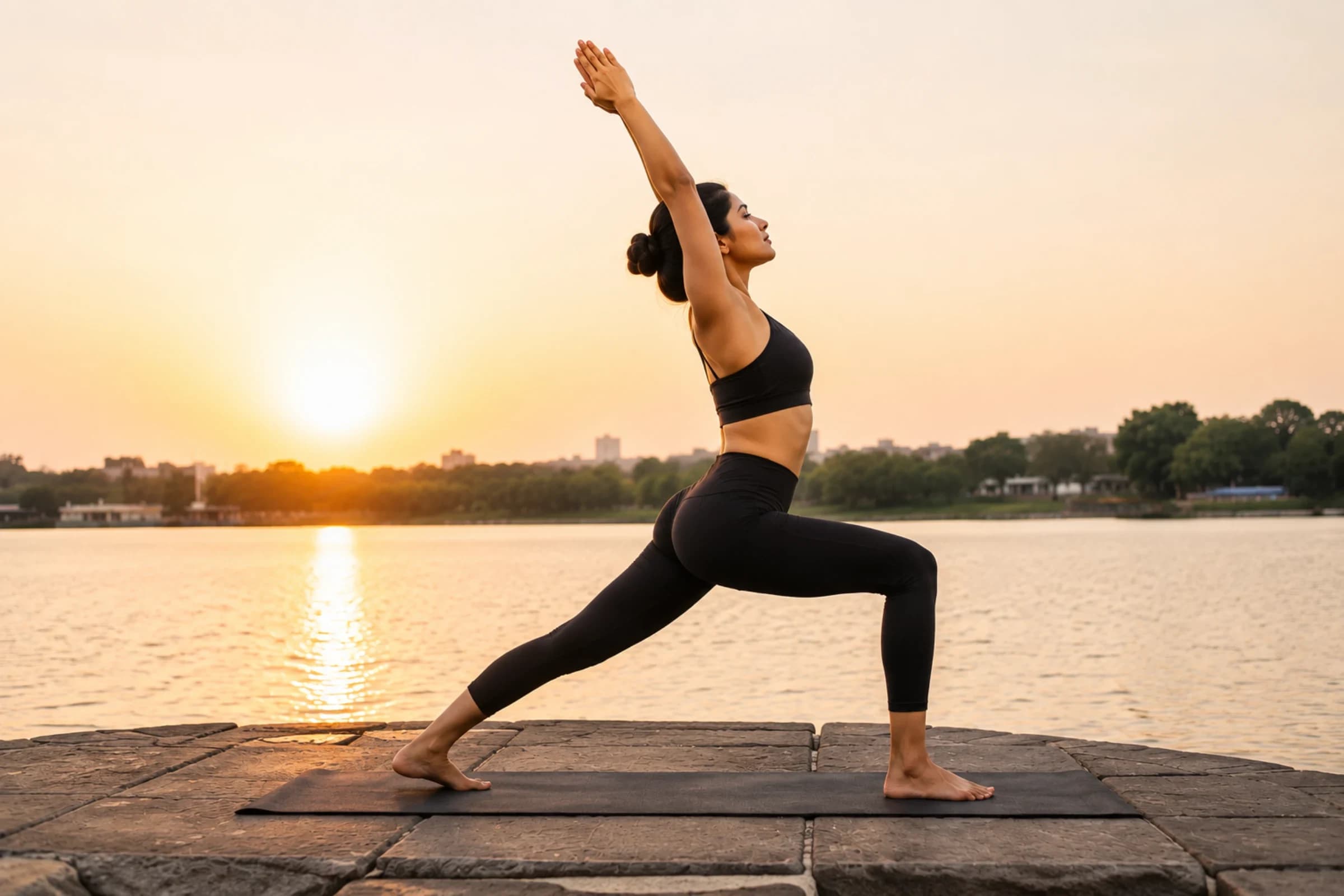
Surya Namaskar, or Sun Salutation, is one of the most popular yoga sequences for people who want a more active practice. It combines several movements into one flowing sequence.
Why Try It?
It can help:
- Move the whole body
- Improve flexibility
- Build muscular endurance
- Increase physical activity
- Warm up the body
How to Practise
Move through the sequence slowly when you're a beginner. Focus on your breathing and proper form instead of trying to complete as many rounds as possible. Once you become comfortable, you can gradually increase the number of rounds.
2. Chair Pose – Utkatasana
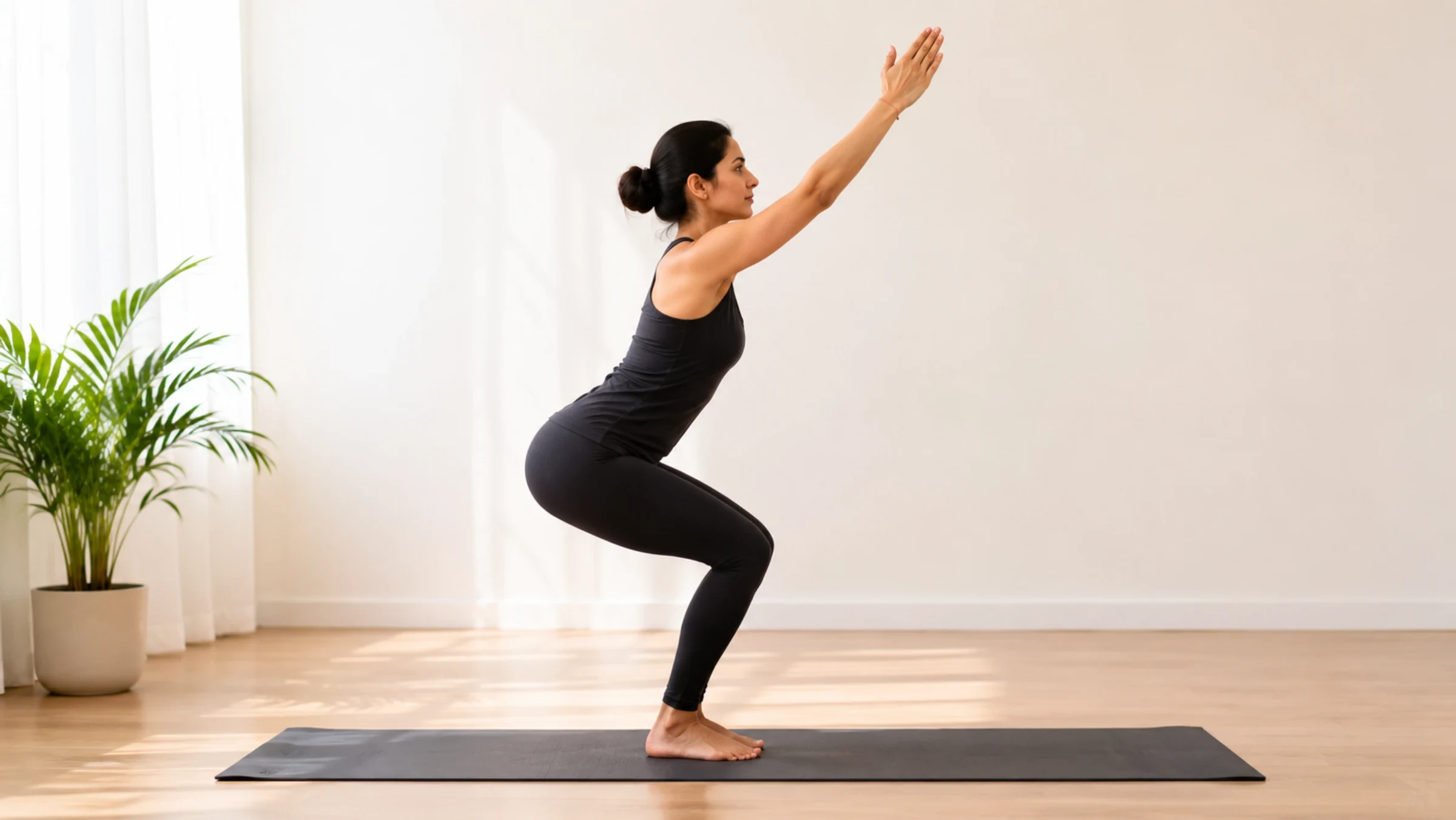
Chair Pose looks simple, but you quickly feel it in your legs.
How to Do It
- Stand straight with your feet comfortable apart.
- Raise your arms.
- Slowly bend your knees.
- Push your hips back as if you're sitting on an invisible chair.
- Keep your chest lifted.
- Hold the position for a few breaths.
- Slowly return to standing.
Why It Helps
It works several muscles, especially around the legs and hips. It can also make your yoga practice more challenging without requiring equipment.
3. Plank Pose – Phalakasana
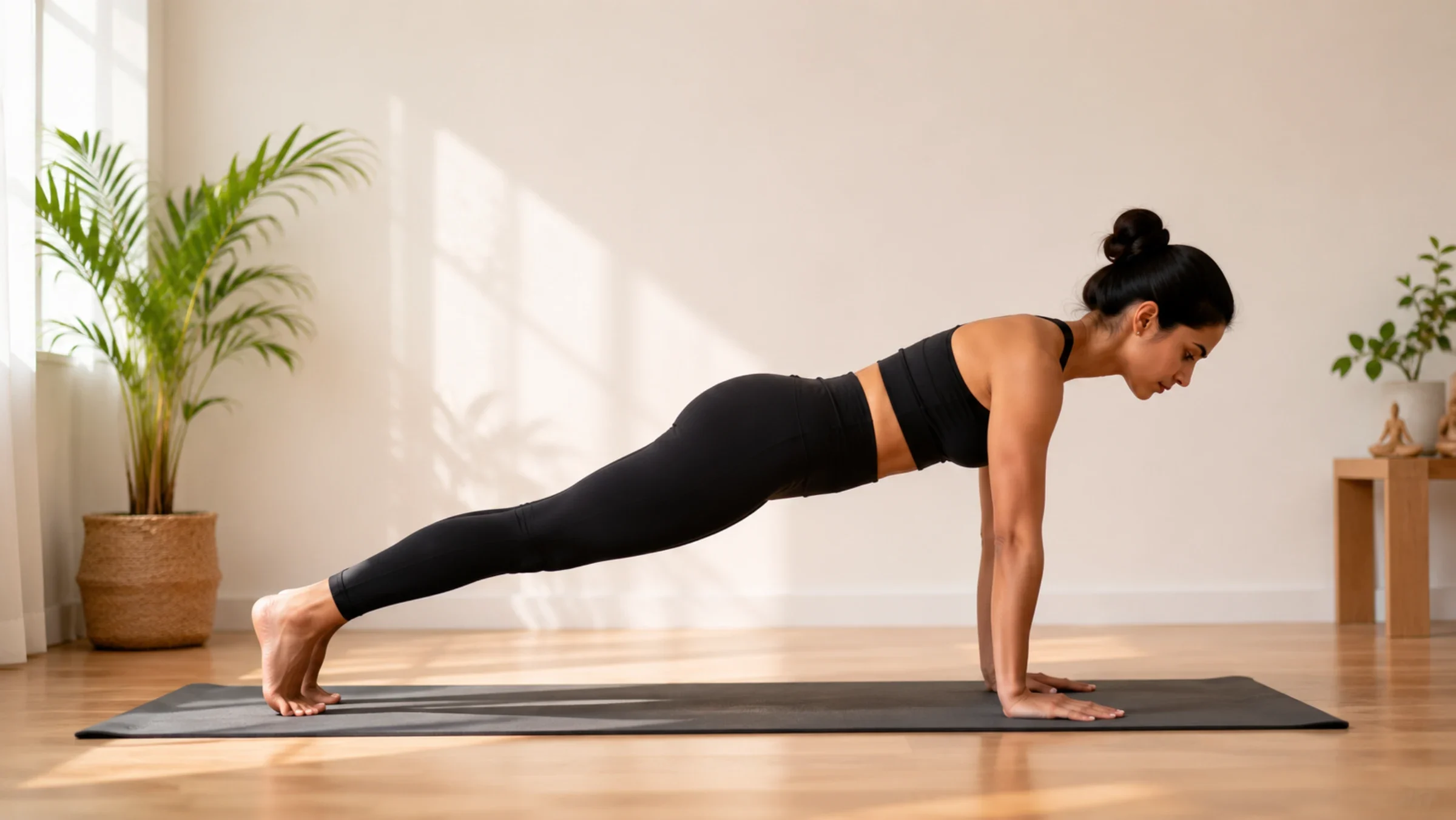
Plank is a simple but effective bodyweight movement.
How to Do It
- Start in a position similar to the top of a push-up.
- Keep your hands under or slightly wider than your shoulders.
- Keep your body in a straight line.
- Tighten your core.
- Hold for a comfortable amount of time.
Benefits
Plank can help strengthen:
- Core
- Shoulders
- Arms
- Back
- Legs
If a full plank is difficult, place your knees on the floor and practise a modified version.
4. Warrior II – Virabhadrasana II
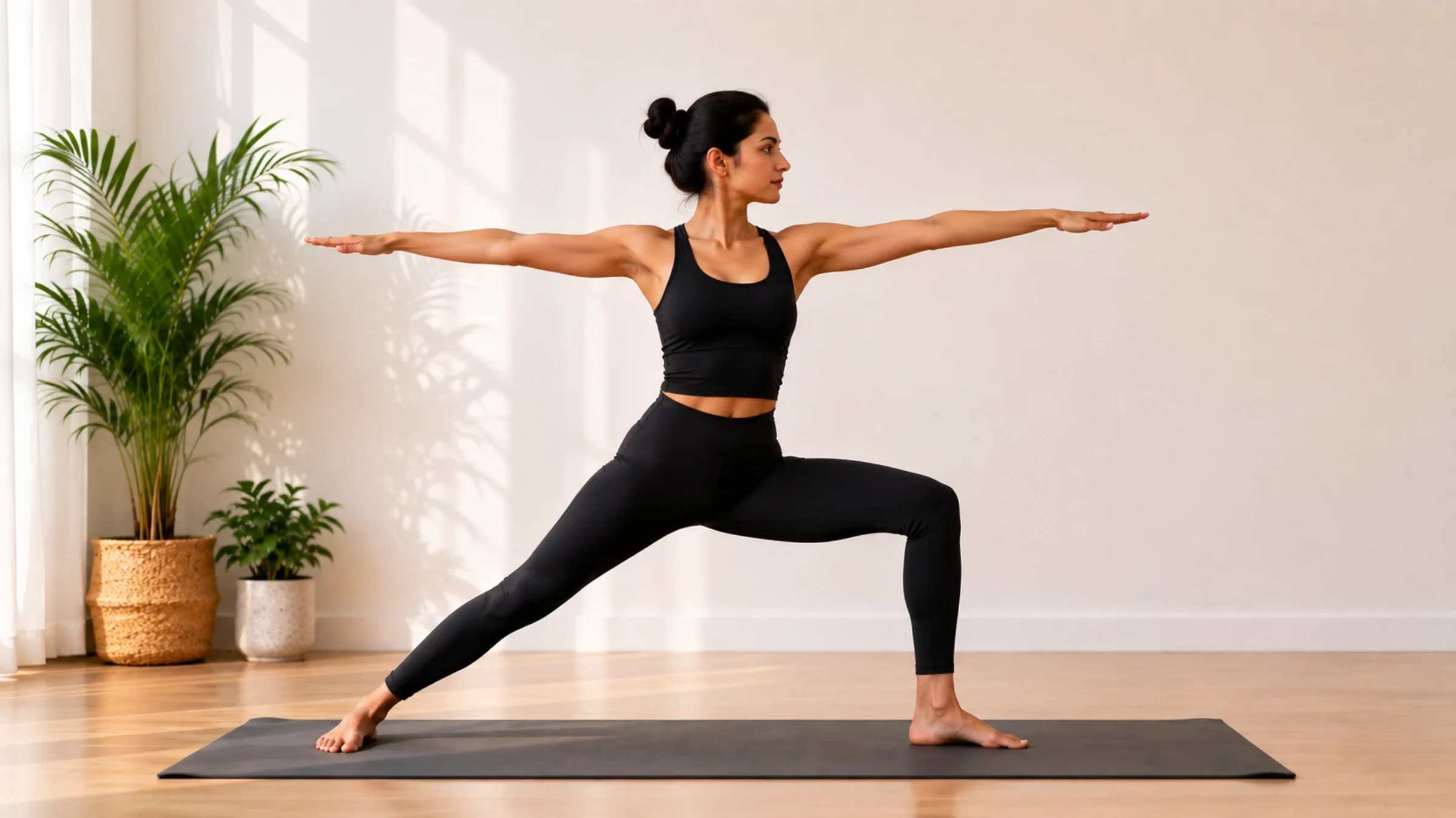
Warrior II is a classic standing yoga pose.
How to Do It
- Stand with your feet wide apart.
- Turn one foot outward.
- Bend the front knee.
- Extend both arms in opposite directions.
- Keep your torso upright.
- Hold and breathe.
- Repeat on the other side.
Why Include It?
Warrior II challenges your legs and improves balance and stability. It is also a good pose for people who spend much of their day sitting.
5. Warrior III – Virabhadrasana III
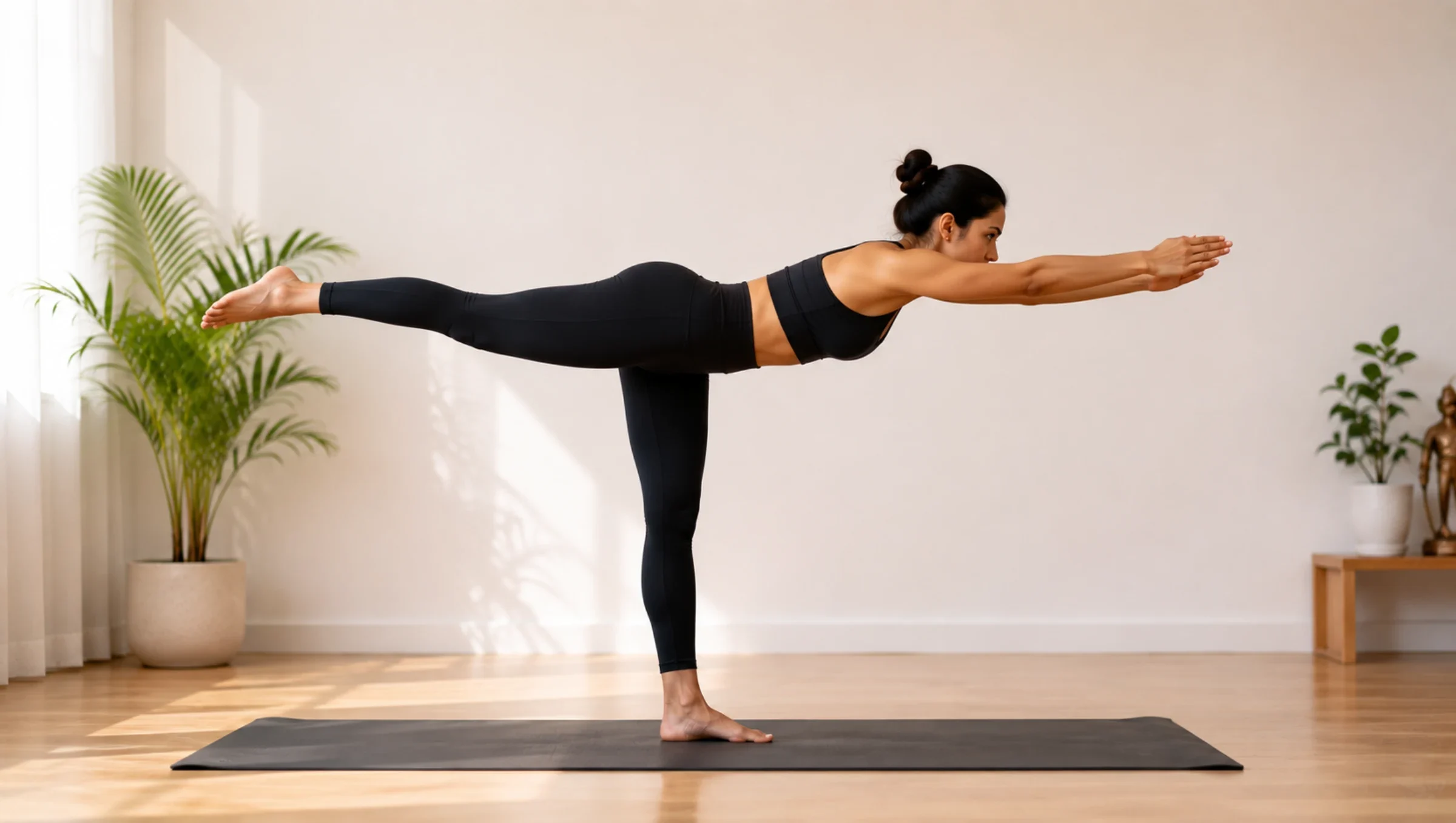
Warrior III is more challenging because it requires balance and core control.
How to Do It
- Start standing.
- Shift your weight onto one leg.
- Slowly extend the other leg backwards.
- Lean your upper body forward.
- Extend your arms forward or keep them by your sides.
- Try to keep your body long and stable.
Don't worry if you cannot perform the pose perfectly at first. Use a wall or chair for support if needed.
6. Boat Pose – Navasana
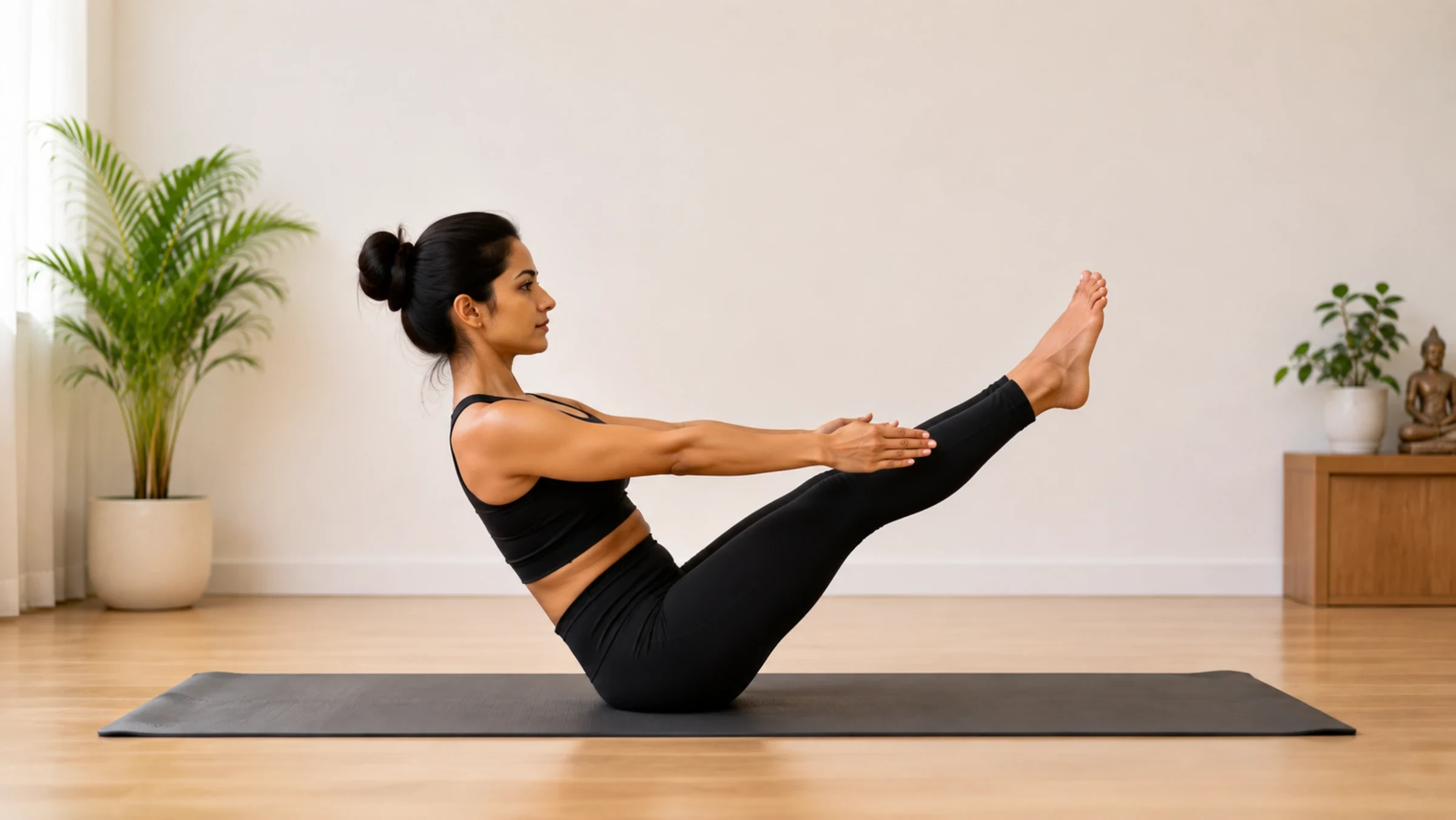
Boat Pose is commonly included in routines focused on the core.
How to Do It
- Sit on the floor.
- Bend your knees.
- Lean back slightly.
- Lift your feet if comfortable.
- Extend your arms forward.
- Keep your chest open.
- Hold for a few breaths.
Beginners can keep their knees bent and feet closer to the floor.
Benefits
It challenges the:
- Abdominal muscles
- Hip muscles
- Core
- Back
7. Bridge Pose – Setu Bandhasana
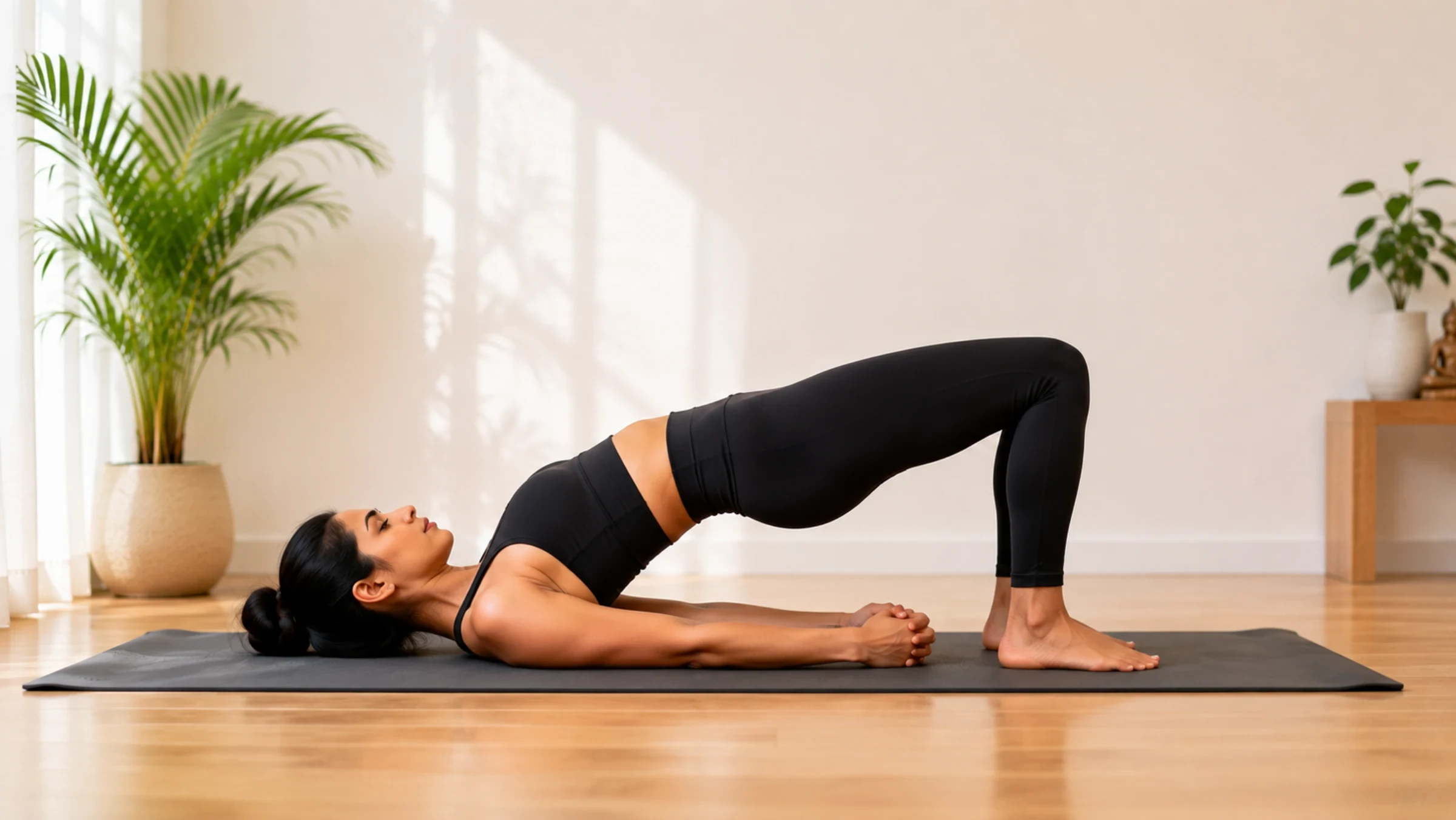
Bridge Pose is another useful pose for a balanced yoga routine.
How to Do It
- Lie on your back.
- Bend your knees.
- Keep your feet on the floor.
- Place your arms alongside your body.
- Press through your feet.
- Lift your hips gently.
- Hold for a few breaths.
- Slowly lower your hips.
Why Practise It?
Bridge Pose can strengthen the legs and hips while opening the front of the body.
8. Cobra Pose – Bhujangasana
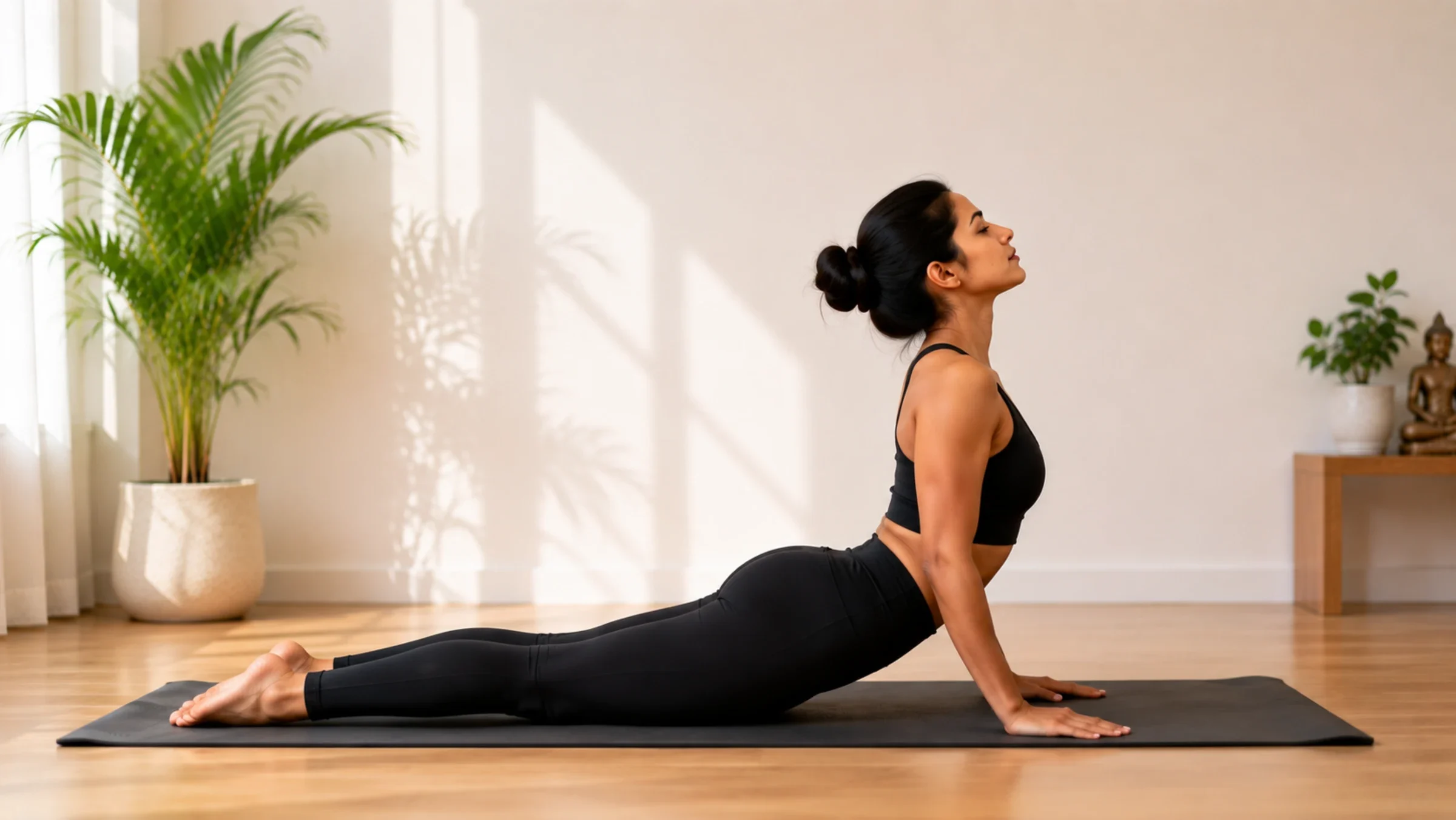
Cobra Pose is commonly used in yoga sequences.
How to Do It
- Lie on your stomach.
- Place your hands near your shoulders.
- Keep your elbows close to your body.
- Gently lift your chest.
- Keep your shoulders relaxed.
- Don't force the movement.
The goal is not to lift as high as possible. Move only as far as feels comfortable.
9. Mountain Pose – Tadasana
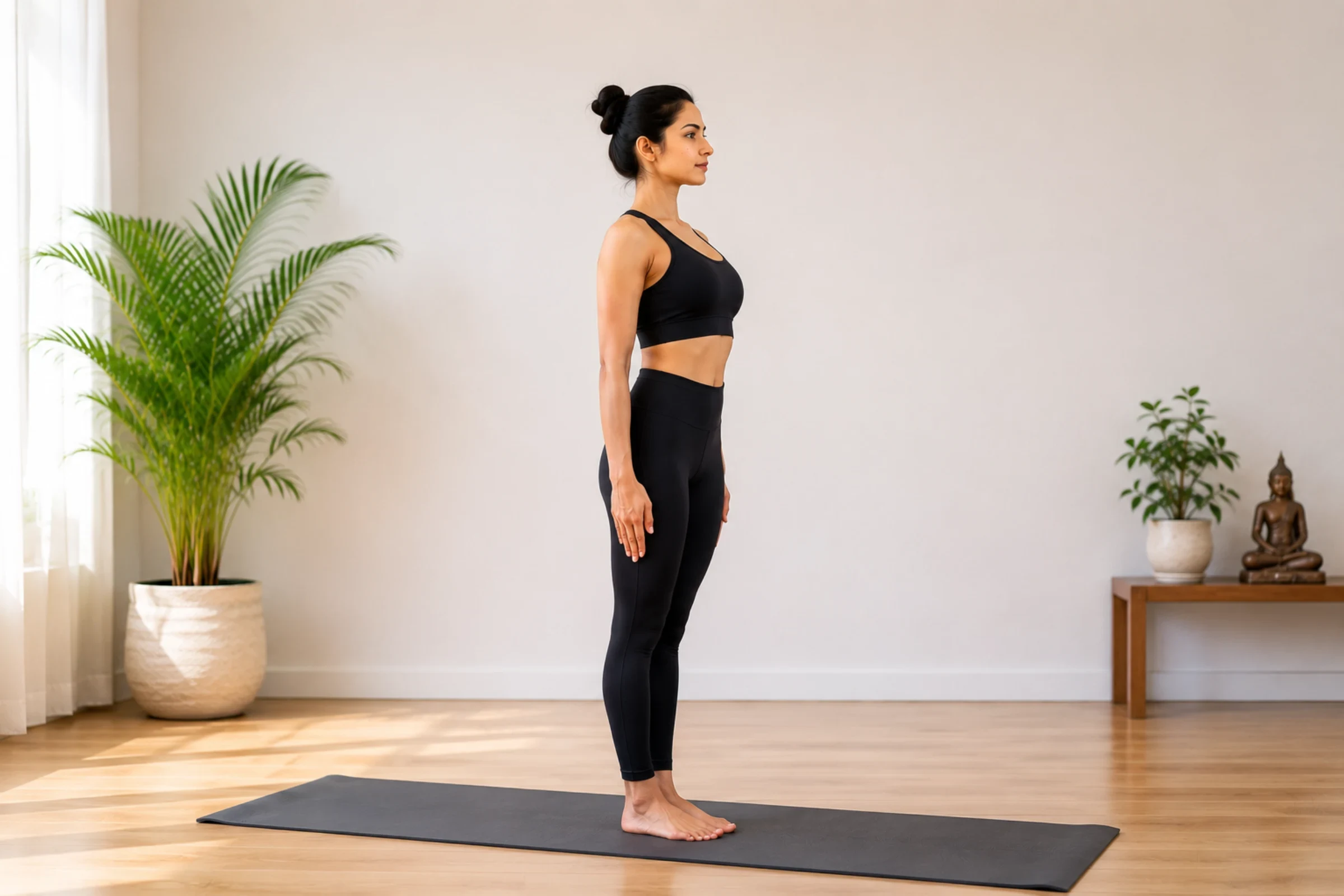
Mountain Pose may look very simple, but it can help you practise posture and body awareness.
How to Do It
- Stand tall.
- Keep your feet grounded.
- Relax your shoulders.
- Lengthen your spine.
- Keep your arms naturally by your sides.
- Take slow, controlled breaths.
You can use this pose between more demanding movements.
10. Downward-Facing Dog – Adho Mukha Svanasana
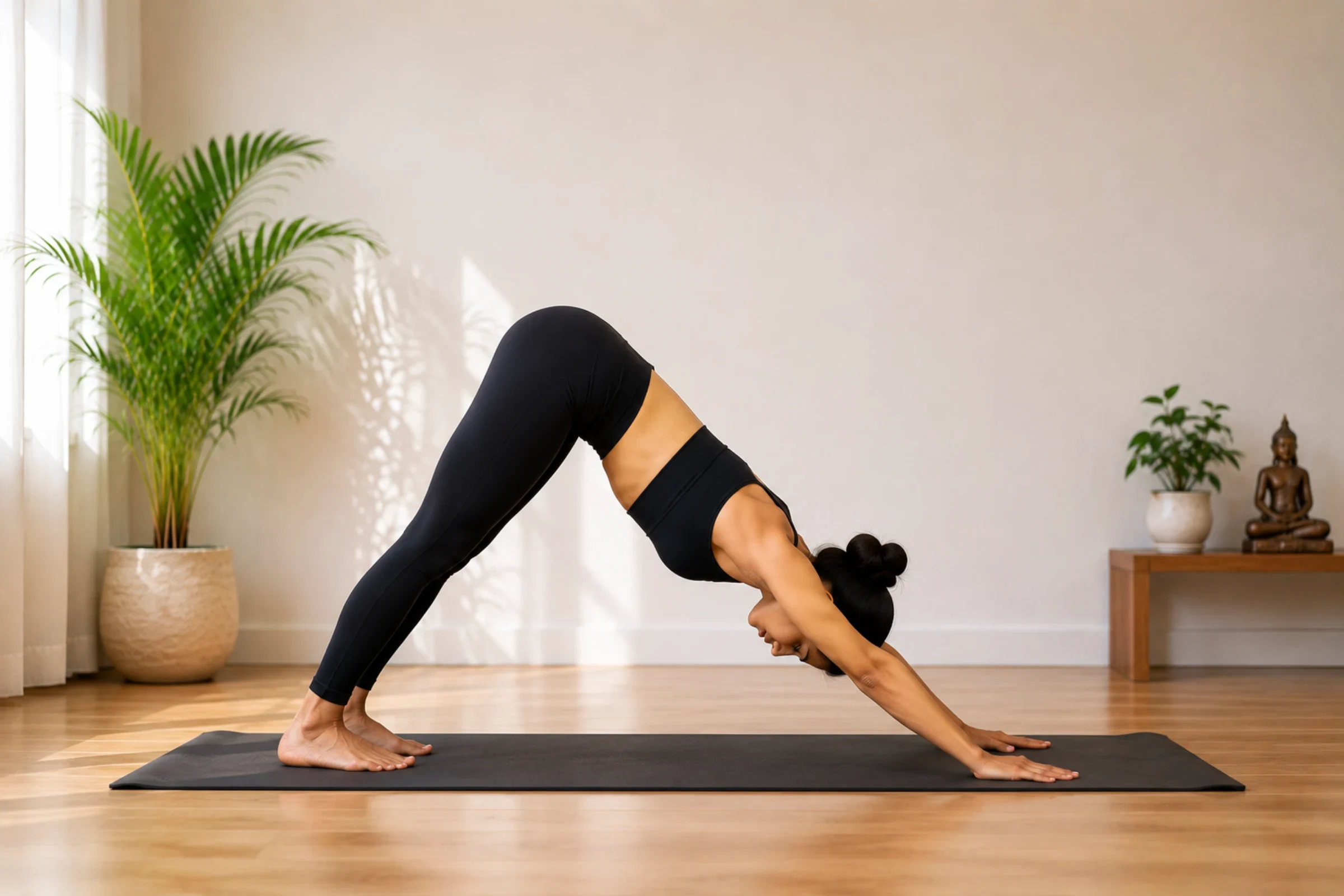
This is one of the most recognisable yoga poses.
How to Do It
- Start on your hands and knees.
- Lift your hips upward.
- Slowly straighten your legs as comfortable.
- Keep your hands firmly on the floor.
- Relax your neck.
- Breathe steadily.
You don't need to force your heels down. A slight bend in your knees is perfectly fine.
20-Minute Yoga Routine for Weight Loss
You don't need to spend two hours on a yoga mat. A simple routine can be a good place to start.
Warm-Up – 3 Minutes
- Gentle neck movements
- Shoulder rolls
- Arm circles
- Easy standing stretches
Main Routine – 12 Minutes
Round 1
- Chair Pose – 30 seconds
- Warrior II – 30 seconds each side
- Plank – 20–30 seconds
- Cobra Pose – 20 seconds
- Downward Dog – 30 seconds
Round 2
Repeat the sequence at a comfortable pace.
Finishing – 5 Minutes
- Bridge Pose
- Gentle seated stretch
- Deep breathing
- Relaxation
Don't worry about completing every pose perfectly. Consistency matters more.
How Often Should You Do Yoga for Weight Loss?
There is no single routine that works for everyone. A practical starting point could be: 3–5 yoga sessions per week.
Some yoga-based weight-management programs studied in research used longer and more frequent sessions, but the best routine is one that is appropriate for your fitness level and sustainable for you.
You can start with 15–20 minutes and gradually increase the duration. If you enjoy longer sessions, you can slowly build toward them.
Yoga Alone or Yoga Plus Walking?
For weight management, combining different kinds of movement can be useful. Here is an example of a weekly schedule:
| Day | Activity |
|---|---|
| Monday | Yoga |
| Tuesday | Brisk walk |
| Wednesday | Yoga |
| Thursday | Brisk walk |
| Friday | Yoga |
| Saturday | Walking + stretching |
| Sunday | Rest or gentle yoga |
Adults generally need at least 150 minutes of moderate-intensity physical activity each week, plus muscle-strengthening activity on at least two days. Some people may need more activity to lose weight or maintain weight loss, depending on their individual situation. Yoga can contribute to your physical activity routine, but you don't have to rely on yoga alone.
Best Time to Do Yoga for Weight Loss
Morning Yoga
Morning yoga can help you start the day with movement.
Evening Yoga
Evening practice can be a good way to relax after work.
After a Long Sitting Day
A short yoga session can help you move after spending hours at a desk. The best time is usually the time you can follow consistently.
Yoga for Belly Fat
Many people specifically search for yoga poses for belly fat. It's important to understand that yoga cannot specifically choose where your body loses fat. Doing abdominal poses can strengthen the muscles around your core, but losing belly fat depends on overall changes in body fat.
A better approach is:
- Eat balanced meals
- Reduce excess calories
- Stay active
- Include strength-focused exercise
- Get enough sleep
- Manage stress
- Stay consistent
Yoga can be one part of this routine.
Common Mistakes Beginners Make
1. Trying Difficult Poses Too Quickly
You don't need to start with advanced poses. Begin with movements that you can perform safely.
2. Focusing Only on Calories
Yoga isn't just about burning calories. Strength, flexibility, balance, stress management and healthy habits matter too.
3. Ignoring Your Form
Doing a pose quickly with poor form isn't better. Slow down and understand the movement.
4. Comparing Yourself With Others
Some people can easily touch their toes while others cannot. Flexibility develops over time.
5. Expecting Results in a Few Days
Weight management takes time. A consistent routine is much more useful than doing intense yoga for a few days and then stopping.
Yoga and Healthy Eating
Protein
- Eggs
- Dal
- Paneer
- Tofu
- Chicken
- Fish
- Yogurt
Fibre
- Vegetables
- Fruits
- Oats
- Beans
- Lentils
- Chia seeds
Healthy Fats
- Almonds
- Walnuts
- Seeds
- Avocado
Healthy Carbohydrates
- Oats
- Whole wheat
- Brown rice
- Millets
- Quinoa
You don't need a perfect diet. Just try to make better choices more often.
Can Yoga Help With Stress and Healthy Habits?
This is one area where yoga may have value beyond physical movement.
NCCIH reports that research has found benefits from yoga for stress management and aspects of mental well-being. It also notes that yoga participation may encourage healthier eating and physical-activity habits in some people.
This matters because weight management isn't only about exercise. Stress, sleep, eating habits and daily routines can all influence your overall health.
Who Should Be Careful With Yoga?
Yoga is generally considered safe when performed properly, but injuries can still happen, especially with difficult poses or poor technique. NCCIH recommends working with a qualified instructor and modifying poses when needed.
Talk to a healthcare professional before beginning a new exercise routine if you have:
- A significant injury
- Severe joint problems
- Serious heart or breathing conditions
- Balance problems
- A chronic health condition
- Recently had surgery
- Another condition that affects physical activity
Pregnant women should also choose appropriate prenatal guidance rather than following a general yoga routine without modification.
If a pose causes sharp pain, stop rather than trying to push through it.
Simple Tips to Make Yoga Part of Your Routine
- Keep Your Mat Ready: Keep your yoga mat somewhere visible.
- Start Small: Even 10–15 minutes can be a useful starting point.
- Pick a Fixed Time: For example, practise before breakfast or after work.
- Don't Chase Perfection: Focus on regular practice.
- Combine Yoga With Walking: A walk plus yoga can give you a more active day.
Why Choose Genestac?
At Genestac, we believe weight management should be about realistic and sustainable lifestyle changes. There is no single exercise or food that can solve everything.
A healthier routine can include:
- Balanced nutrition
- Regular physical activity
- Yoga
- Walking
- Strength training
- Better sleep
- Stress management
- Consistency
Yoga can be a simple and enjoyable part of that routine.
Learn more about Genestac: https://genestac.com
Conclusion
Yoga can be a useful addition to a weight-loss routine, especially when you combine it with healthy eating and regular physical activity.
Poses such as Surya Namaskar, Chair Pose, Plank, Warrior II, Warrior III, Boat Pose, Bridge Pose, Cobra Pose, Mountain Pose and Downward Dog can help you build a balanced yoga routine.
But remember, yoga is not a magic way to lose weight overnight. The real goal is to become more active, build stronger habits and create a lifestyle you can continue for months and years.
Start with simple poses, practise regularly and gradually increase the difficulty as your body becomes more comfortable.
Small daily habits can make a bigger difference than a short burst of extreme exercise.
Frequently Asked Questions
Q1.Which yoga poses are best for weight loss?
A.Surya Namaskar, Chair Pose, Plank, Warrior II, Warrior III and Boat Pose are excellent choices. These poses focus on building strength, improving balance, and keeping your body actively moving.
Q2.Can yoga help reduce belly fat?
A.Yoga can support overall weight management, but it cannot specifically target belly fat. Overall body-fat reduction depends on a combination of a balanced diet, regular physical activity, and healthy lifestyle habits.
Q3.How many days a week should I do yoga for weight loss?
A.A practical starting point is 3–5 sessions per week. Consistency is much more important than trying to complete very long sessions right away, so start small and build up gradually.
Q4.Is 20 minutes of yoga enough for weight loss?
A.Yes, 20 minutes is a great starting point and contributes to your daily physical activity. For effective weight management, combine these short sessions with a balanced diet and other forms of movement like walking.
Q5.Can beginners do yoga for weight loss?
A.Absolutely. Beginners can start with simple poses and shorter sessions. You do not need to be highly flexible or experienced to begin experiencing the physical and mental benefits of yoga.
Q6.Is yoga better than walking for weight loss?
A.Neither is automatically better; they complement each other well. Walking is a great aerobic exercise, while yoga builds strength, balance, and flexibility. Combining both provides a well-rounded fitness routine.
Read the Full Article
Create a free account or sign in to continue reading this article and access exclusive insights.
Genestac Editorial
Published August 17, 2026


